
Table of Contents
ToggleThe landscape of Fortnite has evolved dramatically since its 2017 launch, and 2026 marks a pivotal moment for players exploring alternative gameplay formats. While the standard battle royale dominates, 2D Fortnite represents a fascinating shift in perspective and mechanics that’s reshaping how both casual and competitive gamers approach the title. This isometric take on the classic formula strips away the traditional third-person view and replaces it with a completely different spatial awareness challenge, one that demands fresh building techniques, repositioned combat strategy, and a fundamental rethinking of how you interact with the map. Whether you’re curious about trying 2D Fortnite or you’re already experimenting with the mode, understanding its nuances can elevate your gameplay from confused to commanding. This guide covers everything from basic mechanics to pro-level strategies, ensuring you’re ready to dominate in this unique variant.
Key Takeaways
- 2D Fortnite uses an isometric perspective that compresses spatial awareness, requiring players to abandon third-person instincts like vertical building obsession and adopt horizontal repositioning strategies.
- Building efficiency in 2D Fortnite demands minimal material use—one protective wall often blocks sightlines completely, making material conservation critical for winning multiple engagements.
- Combat positioning in 2D Fortnite prioritizes cover depth and edge-peekhole management over height advantage, with audio cues becoming more directional and valuable than in standard modes.
- Weapon meta in 2D Fortnite favors assault rifles, shotguns, and explosive utilities optimized for compressed engagement ranges of 40-60 meters, with reduced emphasis on sniper rifles.
- Competitive 2D Fortnite players distinguish themselves through resource hoarding (600+ materials for finals), high-ground abandonment, and audio-based threat prediction rather than mechanical speed alone.
- The isometric perspective makes hitbox perception deceptive compared to visual appearance, requiring dedicated aim training specific to 2D space rather than relying on transferred third-person muscle memory.
What Is 2D Fortnite and How Does It Differ From Battle Royale?
The Mechanics of Isometric Gameplay
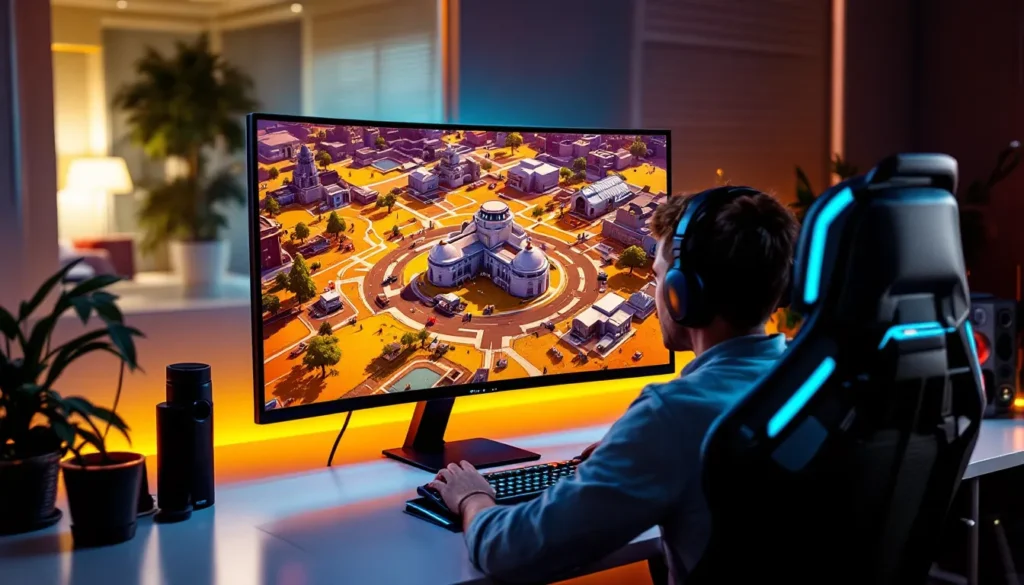
Isometric perspective in 2D Fortnite fundamentally changes how you perceive movement, distance, and threat angles. Unlike the traditional third-person camera that sits behind your character’s shoulder, the isometric view places the camera at a fixed diagonal angle, typically 45 degrees, giving you a bird’s-eye perspective that flattens vertical movement into a more compressed visual space.
In this format, your character’s position, building placement, and enemy locations all exist on a 2D plane rather than the 3D space you’re accustomed to. This means vertical building still matters, but it’s rendered differently. A structure that would appear towering and imposing in traditional Fortnite might appear as a simple stack in isometric view. Movement feels tighter and more tactical because sightlines compress: corners that seemed defensible suddenly expose you to angles you didn’t anticipate.
The isometric mechanics introduce reduced visual clutter while simultaneously increasing spatial complexity. You’re processing the same tactical information, but the presentation demands different instincts. Your brain must recalibrate distance judgment, what looks close might be considerably further away, and vice versa. This adjustment period is typically the biggest hurdle new 2D Fortnite players face.
Camera movement and rotation work differently too. You can’t pivot the camera freely around your character like in third-person mode. Instead, you work within the fixed isometric frame, which actually streamlines decision-making for some players and creates frustration for others.
Key Differences From Traditional Third-Person Fortnite
The jump from standard Fortnite to 2D Fortnite involves several critical divergences:
Building visibility and placement plays out entirely differently. In traditional Fortnite, you build vertically to gain high ground and visibility. In 2D Fortnite, vertical structures compress into the isometric plane, so a 10-story tower doesn’t grant the same sightline advantage, positioning relative to the camera angle matters far more than raw height.
Line of sight mechanics become more claustrophobic. Objects that barely obscured vision in third-person might completely block your view in isometric. A single wall placed at the wrong angle can hide enemies completely or, conversely, leave you exposed from unexpected directions.
Movement speed and momentum feel distinct. Sprint feels snappier in 2D Fortnite. Strafing patterns that worked against snipers or AR spray in standard Fortnite often fall flat here because your hitbox relationship to cover shifts dramatically.
Hitbox perception is perhaps the most jarring difference. Your character model appears flatter, smaller, and sometimes deceptively positioned from your actual hitbox. Shots that look like they should hit frequently miss, and shots from angles that seem impossible often connect. This discrepancy forces you to rebuild muscle memory for weapon accuracy.
Building speed in 2D Fortnite often feels accelerated relative to third-person counterparts. Fewer visual reference points means cleaner build execution: what would take three seconds to visualize and execute in traditional Fortnite might take one and a half in 2D.
These differences aren’t merely cosmetic, they fundamentally reshape combat flow, decision timing, and resource management.
Why 2D Fortnite Matters in the Gaming Landscape
2D Fortnite exists at the intersection of nostalgia and innovation. The gaming industry has spent the last decade pushing toward higher fidelity 3D experiences, yet there’s been a quiet resurgence of interest in 2D gameplay perspectives, particularly isometric views, across titles ranging from indie roguelikes to AAA sequels. For Fortnite specifically, the 2D variant serves multiple purposes.
First, it’s a competitive accessibility play. Certain players find third-person battle royale overwhelming due to the constant camera management, 360-degree threat assessment, and three-dimensional spatial complexity. The 2D isometric format reduces some of that cognitive load. Sightlines are more predictable, enemy positions clearer, and building decisions less about “which direction is truly up” and more about tactical placement within a visible plane.
Second, it’s nostalgic callback currency. Players who grew up with isometric action games, think Diablo, the original Doom’s limitation to left-right movement, or countless arcade classics, find something familiar and satisfying in 2D Fortnite. That emotional resonance drives engagement and differentiation in a market saturated with 3D battle royales.
Third, 2D Fortnite functions as a balancing sandbox. Weapon effectiveness, building speed, and resource availability can be tuned independently from the main battle royale. This allows Epic Games to test mechanics that might be too extreme for standard Fortnite without alienating the core player base. Successful experiments can backport into the main game: failures stay isolated.
From a streaming and esports perspective, 2D Fortnite offers visual clarity that translates better to spectators. Camera angles don’t spin wildly, visual clutter is minimized, and viewers can follow action more intuitively. For content creators, it’s fresh territory, less saturated with guides, clips, and established meta knowledge.
The mode also attracts mechanical purists. Players who believe Fortnite’s building system is sometimes obscured by third-person perspective jank find that 2D rendering makes building interactions more transparent and skill-expressive. A poorly placed wall or a frame-perfect edit becomes unmistakably obvious to everyone watching.
Eventually, 2D Fortnite isn’t replacing the core battle royale, it’s expanding Fortnite’s identity and proving the franchise can absorb significant mechanical shifts without losing its core appeal.
Essential Building Techniques for 2D Fortnite
Mastering Vertical and Horizontal Structure Placement
Building in 2D Fortnite requires rethinking what “vertical” and “horizontal” even mean. In the isometric plane, both directions compress relative to how they appear in third-person Fortnite.
Vertical stacking still provides protection and height advantage, but the visual payoff is different. When you stack walls upward in 2D, they appear to project diagonally across the isometric grid. A three-high wall formation creates a staircase-like silhouette rather than a towering barrier. This doesn’t make vertical building useless, it’s still essential for dodging ground-level spam, but it requires different judgment about how many walls you actually need to achieve adequate protection.
Practical vertical building strategy involves smaller, more responsive stacks. Instead of building five walls high to establish dominance, a two-to-three high stack often suffices in 2D Fortnite because sightlines are compressed and opponents can’t leverage the same vertical angles they would in standard Fortnite. This efficiency conserves materials while maintaining protection.
Horizontal expansion becomes more prominent in 2D Fortnite. Building outward, perpendicular to threat vectors, provides area denial more effectively than stacking skyward. The isometric perspective makes horizontal spread feel more tactically relevant because diagonal sightlines through compressed space matter more than elevation differences.
Consider this practical scenario: an opponent is spraying from your left. In third-person Fortnite, you might build a vertical wall and rotate behind it. In 2D Fortnite, building a wall to your immediate left and then extending horizontally away from the threat vector often works better. The compressed perspective means that opponent loses sightline faster when you move outward rather than upward.
Ramp placements function as repositioning tools rather than assault structures. Ramping toward an opponent in 2D Fortnite doesn’t provide the same aggressive psychological pressure it does in third-person. Instead, ramps work best for mobile repositioning, jumping your ramp to dodge spam or to reach elevated cover.
When building ramps, angle them perpendicular to incoming fire rather than toward threats. This lets you vault over and reposition mid-fight rather than committed charging directly at opponents. The isometric perspective shows your ramp trajectory more clearly, so precise angling is more achievable and more necessary.
Floor placements deserve special attention. Floors in 2D Fortnite are defensive anchors. Place them under yourself to deny ground-level access and establish a solid foothold. Importantly, floors also create visual terrain, they break up opponent sightlines more effectively in compressed space than they do in third-person. A single floor sometimes completely blocks an opponent’s angle.
Edit placement requires memorizing the isometric grid. Edits that seem intuitive in third-person Fortnite might create unexpected openings in 2D. A side-ramp edit that provides a peekhole in standard Fortnite might expose your entire flank in isometric view. Spend time in creative mode learning which edit patterns translate well to 2D space and which ones create unintended vulnerabilities.
Resource Management and Farming Strategies
Materials, wood, brick, and metal, function identically in 2D Fortnite as they do in standard mode, but farming efficiency and consumption rates differ slightly.
Wood farming should remain your priority early-game in 2D Fortnite. Trees yield the same material counts, but you harvest them while positioned in isometric space. Approach trees from behind or the side to farm safely: facing toward potential threats while swinging your pickaxe is a quick way to get caught off-guard. The compressed perspective means enemies detect you farming faster than you might expect, your character model appears more visible relative to cover.
Target destructible wood objects aggressively. Fences, signs, and wooden structures yield decent material return for minimal farming time. This efficiency matters because you’ll burn through materials faster in 2D Fortnite fights due to building small, responsive structures rather than large fortifications.
Brick and metal farming should scale with match progression. Early game, ignore brick and metal: farm wood. Mid-game, transition to brick harvesting when you encounter houses or structures. By late-game, prioritize metal scavenging from cars, safes, and metal structures. The increased building frequency in 2D Fortnite (due to smaller, more reactive structures) means material consumption accelerates, reserve maximum material capacity for end-game scenarios.
Material efficiency in engagements means using exactly enough building to survive, no more. Where a third-person player might over-build for safety margin, a 2D Fortnite player should build just enough to block sightlines. One wall instead of two, a three-high ramp instead of five, minimal floor placement, this restraint extends your material reserves across multiple fights.
Contested drop strategy differs slightly in 2D Fortnite. High-supply locations like named POIs still prioritize drops, but the compressed perspective makes contested early-fights more chaotic than standard Fortnite. If you drop hot in 2D Fortnite, expect faster engagements with less time to farm initial materials. Plan rotations that include secondary farm locations to rebuild material reserves before rotating into dangerous zones.
Late-game material accumulation becomes critical. By final circles, maintaining 500+ wood is non-negotiable. The isometric perspective makes late-game rotations shorter visually (because space appears compressed) but equally deadly: final circles in 2D Fortnite demand frequent reactive building. Farm aggressively during mid-game to bankroll your late-game survival.
Combat Strategies That Win Games
Positioning and Movement in the Isometric View
Positioning in 2D Fortnite is fundamentally about understanding the safe zones within the isometric grid. Unlike third-person Fortnite where you can position at numerous angles relative to cover, the isometric perspective forces you into more linear threat assessment.
Cover positioning should prioritize depth over height. Find cover that blocks sightlines along the isometric axes, typically perpendicular to the camera angle. A rock that seems like minimal cover in third-person might completely block vision in 2D Fortnite because of how the perspective compresses space. Test different cover positions in creative mode: you’ll quickly notice which pieces genuinely protect you versus which are illusions.
Position yourself at the edges of cover rather than dead-center. This maximizes your ability to peek and strafe while keeping most of your body protected. The isometric view makes body exposure more obvious, so edge-positioning disciplines your spacing.
High ground advantage exists in 2D Fortnite but functions differently. Elevation still matters, but not as dramatically. A player on a two-story structure has minimal sightline advantage over a ground-level opponent in isometric view compared to third-person Fortnite. So, holding high ground should serve purposes other than raw visibility, it controls rotation pathways or establishes defensive real estate. Don’t over-invest in high-ground fights if you can achieve the same tactical result with horizontal repositioning.
Movement patterns must account for the camera angle. Strafing in 2D Fortnite involves moving parallel or perpendicular to the camera rather than in any arbitrary direction. Diagonal movement is still possible but less efficient for dodge-strafe patterns.
Optimal strafe patterns in 2D Fortnite involve:
- Quick perpendicular movement (left-right relative to camera) for spray-dodge evasion
- Forward-backward movement for closing or creating distance
- Minimal diagonal movement: it’s slower and less predictable
Practice A-D strafe patterns (left-right movement) more than you would in third-person Fortnite. This single-axis movement is faster to initiate and more responsive in isometric space.
Peek-and-retreat cycles should be shorter and faster in 2D Fortnite. Rather than holding a peek for multiple seconds, quick peeks with immediate repositioning work better. The compressed perspective means opponents assess your position and return fire faster: lingering exposes you unnecessarily.
Audio cues and footsteps become more directional and useful in 2D Fortnite. The isometric camera placement makes sound positioning more intuitive, footsteps from your left literally sound like they’re coming from your left relative to the screen. Abuse audio awareness more than you would in third-person modes.
Weapon Selection and Loadout Optimization
Weapon meta in 2D Fortnite shares similarities with standard Fortnite but with notable distinctions in effective ranges and DPS thresholds.
Shotguns remain close-range kings but require tighter positioning. The isometric perspective compresses close-range distances, making shotgun effective range feel shorter. To combo a shotgun effectively, you need to close distance faster and be more precise with positioning. Pump-action shotguns dominate 2D Fortnite more decisively than they do in third-person because the compressed space makes landing full-pellet hits more rewarding.
Optimal shotgun strategy: close gaps aggressively, full-build commitment for final approach, then commit to the engagement. Half-measures, building partway then hesitating, often result in whiffed shots because momentum and distance judgment differ from third-person muscle memory.
Assault Rifles (AR-class weapons) are bread-and-butter tools in 2D Fortnite. Their bloom characteristics and damage falloff remain balanced, but the compressed perspective makes sustained AR spray more effective. Opponents can’t dodge around as many angles, so consistent AR pressure accumulates damage faster.
Loadout convention in 2D Fortnite typically runs:
- Assault Rifle (primary DPS)
- Shotgun (close-range finishing)
- Healing item (shield or bandages)
- Healing item or mobility (second healing or jump pads/gliders)
- Utility (grenades, sniper, or secondary healing)
This loadout prioritizes immediate weapon access for mid-range engagements, which dominate 2D Fortnite’s compressed sightlines.
Sniper Rifles see reduced usage in 2D Fortnite compared to third-person modes. The isometric perspective makes leading shots more difficult, and targets don’t stay visible in sightlines as long. Sniper usage is situational, holding tight angles in late-game or specific positioning scenarios, rather than a primary engagement tool.
Explosives (grenades, rockets, C4) become more valuable in 2D Fortnite. The isometric perspective makes area denial via splash damage more effective because targets have fewer perpendicular escape vectors. A grenade that seems marginally useful in third-person Fortnite becomes a strong utility tool in 2D.
Consider carrying grenades or a launcher as your 5th slot in most matches. Building destruction via explosives forces repositioning more decisively in 2D space.
Healing economy should emphasize shield potions over healing items. The faster engagement pace in 2D Fortnite means you’ll take burst damage rather than sustained damage. Shield potions provide damage prevention: healing items provide recovery. Prioritize shields early, transition to healing mid-game as you’ve taken sustained damage.
Ammunition management works identically to standard Fortnite. Carrying ammunition reserves proportional to your loadout is essential. A two-AR loadout burns ammo fast in 2D fights: ensure you pick up sufficient ammo off ground loot or from eliminated opponents.
Advanced Tips for Competitive Play
Training Routines and Practice Drills
Competitive 2D Fortnite requires deliberate practice, not casual playing. The mechanical differences from third-person Fortnite mean your existing muscle memory is partially useful but frequently misleading.
Aim training in 2D Fortnite should focus on isometric-specific targets. Use aim trainers or creative maps that replicate 2D perspective. Practice tracking moving targets, flick shots at stationary opponents, and spray patterns unique to isometric space. Standard third-person aim trainers develop transferable skills, but 2D-specific training accelerates proficiency.
Dedicate 15-20 minutes daily to aim routines. Run progressively difficult bot scenarios: stationary targets, moving targets, targets behind minimal cover, and finally, targets that build reactive structures. This progression trains decision-making alongside mechanical precision.
Building drills should isolate specific scenarios:
- Defensive builds: Practice rapid wall placement, floor placement, and ramp adjustment when taking incoming fire from various directions.
- Rotation builds: Practice bridges and ramps connecting distant cover points while simulating moving enemies.
- Edit sequences: Practice door edits, window edits, and complex edits used in high-pressure scenarios.
- Recovery builds: Practice structures that stabilize your position after taking damage or repositioning mid-fight.
Run each drill for 10-minute blocks. Prioritize consistency over speed initially: perfect execution matters more than frame-perfect timing in early training.
Game scenario training involves playing custom matches against bots or friends in controlled 2D Fortnite scenarios. Set parameters: “1v1 with loadout X in Y arena”, “2v2 team fight in town Z”, “free-for-all with material caps of 300 each”. This bounded practice accelerates decision-making in realistic situations.
VOD review is essential for competitive growth. Record your matches, then watch them critically. Identify moments where your positioning was suboptimal, your building was inefficient, or your weapon choice was poor. Compare your decision-making to pro players (discussed below) and note the differences.
Sensitivity and keybind optimization: Establish 2D Fortnite-specific settings that differ from your third-person binds if necessary. Lower sens for AR spray (1.2-1.5x typical sens is common for 2D Fortnite), faster sens for building edits (1.3-1.6x typical), and optimize your building keybinds for left-hand accessibility. Spend a week adjusting sensitivity before committing: the difference is dramatic.
Analyzing Pro Players and Their Strategies
Competitive 2D Fortnite is still developing, but several players have emerged as mechanical benchmarks. Study their gameplay for strategic insight.
High-ground abandonment is a pro-level insight many aspiring 2D Fortnite competitors miss. Watch how top players frequently ignore high-ground fights, instead repositioning horizontally or retreating entirely. This counter-intuitive approach works because the isometric perspective minimizes high-ground advantage. Copying this mindset, valuing smart retreat over prideful high-ground defense, immediately improves win rates.
Resource hoarding appears in pro 2D Fortnite more prominently than standard Fortnite. Top players maintain 600+ materials heading into final circles rather than the 400-500 typical in third-person. This material reserve enables the frequent defensive building required in compressed space, where single engagements demand 80-150 materials rather than 30-50.
Weapon efficiency separates pros from competent players. Pro 2D Fortnite players carry weapons optimized for isometric engagement ranges. They identify what distance engagements typically occur at (usually 40-60 meters in 2D Fortnite compared to 60-100 in third-person), then build loadouts around that reality. An AR with maximum range is often unnecessary: a mid-range AR with accuracy bonuses works better.
Audio reading features prominently in pro 2D Fortnite strategy. Because the isometric perspective makes audio positioning intuitive, pros use footstep audio, building audio, and weapon audio to predict enemy positions and movements. They pre-build defensively based on audio cues rather than waiting for visual confirmation.
Explosive utility usage distinguishes average players from pros. Grenades, rocket launchers, and impact damage items are carry priorities for competitive 2D Fortnite players. Watch how pros use splash damage to displace opponents and destroy structures, efficiency that transforms close fights.
Late-game positioning in pro 2D Fortnite involves securing central real estate several circles ahead of final rotation. While third-person pros rotate dynamically into final circles, 2D Fortnite pros lock down center positions early, forcing opponents to push into defended territory. This positional dominance is harder to overcome in compressed space where escape options are limited.
To analyze pro players effectively, watch their streams or YouTube VODs with specific focus on decision-making, not just mechanical execution. Pause frequently. Ask yourself: “Why did they place that wall there instead of there?” “Why retreat instead of fight?” “Why carry explosives over a sniper?” This critical thinking accelerates learning more than passively watching gameplay.
Common Mistakes New Players Make
Most new 2D Fortnite players carry bad habits from third-person Fortnite that actively hurt their performance. Recognizing and correcting these mistakes accelerates improvement.
Over-building is endemic in newcomers. Players default to building excessive walls, ramps, and floors, a reasonable defensive approach in standard Fortnite that’s wasteful in 2D Fortnite. The compressed perspective means fewer walls achieve the same protection. A single wall often blocks an opponent’s sightline completely: the second wall is unnecessary material expenditure.
Correction: Discipline yourself to build minimally. Instead of three walls protecting an angle, place one. If that one wall fails, your follow-up was to move, not over-build. This resource conservation extends your mid-game runway significantly.
Vertical obsession is another common trap. Third-person Fortnite players fixate on high-ground fights because height legitimately matters in 3D space. In 2D Fortnite, height matters far less. New players waste materials stacking vertical structures they could avoid entirely by repositioning horizontally.
Correction: When facing pressure, consider horizontal escape before vertical climbing. Move sideways (perpendicular to threats) more frequently than you move upward. This feels unnatural to third-person veterans but is correct for isometric gameplay.
Momentum mismanagement during close-range engagements frustrates newcomers. The compressed perspective changes how fast movement feels, making approaches that seem controlled actually reckless, or careful positioning seem unnecessarily cautious. New players often charge opponents when they should circle-strafe, or vice versa.
Correction: Slow down your approach speed until you’re comfortable with distance judgment. Better to whiff a close-range fight by being outside shotgun range than to get caught in a bad position. Once you’re comfortable with isometric distances, aggressiveness improves naturally.
Sensory overload from audio cues affects many newcomers. The isometric perspective makes audio directionality more pronounced and useful, but new players often ignore it, instead focusing solely on visual information. This is a missed advantage.
Correction: Play with sound on and volume adjusted reasonably. Learn to trust audio positioning. When you hear footsteps from your left, expect threats from that direction. This simple discipline dramatically improves threat prediction.
Poor peekhole management causes repeated deaths. New players build walls with peekhole edits they can’t fight through effectively, or they build windows that expose more of their body than they’re comfortable with. They haven’t internalized how the isometric perspective renders their hitbox position versus their visual perception.
Correction: Use narrow peekhole edits (single-character-width windows) initially. As you improve, expand to wider angles. Always test your peekhole by checking what enemies can see of your character model before committing to it as a fight position.
Loadout inefficiency plagues newcomers who copy third-person meta without adaptation. Snipers, specific AR variants, and healing distributions that work in standard Fortnite sometimes underperform in 2D Fortnite.
Correction: Watch how pro players build 2D-specific loadouts through experimentation or copying pro builds exactly. Don’t assume familiarity transfers perfectly.
The Future of 2D Fortnite and What’s Next
2D Fortnite’s trajectory in 2026 points toward increased integration with standard Fortnite systems while maintaining mechanical independence. Epic Games has signaled that 2D Fortnite is a long-term commitment, not a limited-time novelty.
Cosmetic parity is a near-term expectation. Every skin, emote, and cosmetic item available in standard Fortnite should render properly in 2D Fortnite. Player investment in cosmetics incentivizes cross-mode play. Expect cosmetic parity implementation by mid-2026 if not already established.
Competitive seasons for 2D Fortnite are likely incoming. Ranked ladder systems, seasonal competitions, and tournament support would legitimize 2D Fortnite as a competitive format. Watch for announcements about official competitive support, this would accelerate the mode’s growth and professionalization significantly.
Balance divergence between 2D Fortnite and standard modes is inevitable and desirable. A weapon broken in standard Fortnite might be balanced in 2D Fortnite due to the different engagement distances and sightline mechanics. Epic Games will increasingly tune 2D Fortnite independently, creating game-specific meta evolution.
Map variations specific to 2D Fortnite could emerge. The current map rotations might expand to include isometric-optimized terrain design, specific POI layouts or island designs that leverage 2D mechanics. Alternatively, 2D Fortnite might develop separate seasonal content independent from the battle royale.
Community creation tools like Creative 2.0 will likely expand 2D Fortnite support. Content creators will develop 2D-specific mini-games, escape rooms, and competitive arenas more sophisticated than current creative mode offerings. This user-generated content drives engagement and community building.
Cross-platform performance optimization should improve throughout 2026. Currently, 2D Fortnite runs on PC, console, and mobile platforms, but mobile optimization sometimes lags. Expect performance improvements and better feature parity across platforms as the mode matures.
Streaming and esports integration represents the biggest growth opportunity. As more content creators focus on 2D Fortnite content, audience familiarity grows. Tournament organizers will take notice, and esports investment typically follows audience demand. By late 2026, amateur competitive 2D Fortnite circuits would likely be viable.
For players, this future landscape means investing in 2D Fortnite skill now positions you ahead of the curve. Early adopters who master the mechanics will have competitive advantage if 2D Fortnite becomes a primary esports format. Even if it doesn’t achieve mainstream dominance, the skillset transfers value, mechanical precision in 2D space improves general gaming proficiency across other titles.
Meanwhile, staying updated on patch notes, meta shifts, and pro developments keeps you relevant. Follow esports news outlets, creator channels that specialize in 2D content, and official Fortnite announcements. The 2D Fortnite community is tighter and more engaged than the broader Fortnite player base, which means community-driven strategy guides and pro analysis are invaluable resources.
One practical example: mechanics learned mastering 2D building translate to standard Fortnite efficiency. Understanding how to minimize material waste in compressed space makes you a more economical builder in any Fortnite mode. Skills developed in 2D Fortnite are an investment in broader gaming capability.
Conclusion
2D Fortnite represents a meaningful evolution in how players approach the battle royale formula. By stripping away the traditional third-person camera and replacing it with isometric perspective, Epic Games created a mode that feels simultaneously alien and familiar, a fresh challenge for veterans and an accessible entry point for players overwhelmed by standard Fortnite’s mechanical complexity.
Mastering 2D Fortnite requires abandoning certain third-person instincts: the obsession with high ground, the over-building habit, the momentum management patterns. In their place, you develop spatial awareness calibrated to compressed space, resource efficiency that borders on minimalism, and positioning discipline that prioritizes smart retreats over prideful stands.
The building mechanics demand smaller, more responsive structures. Combat strategy hinges on tight positioning, accurate weapon selection, and audio awareness. Competitive play requires deliberate practice, pro-player study, and willingness to adapt your approach based on isometric-specific lessons.
As 2D Fortnite matures throughout 2026, the competitive landscape will solidify. Early skill development positions you as a credible player within the emerging esports scene. Even if 2D Fortnite never achieves mainstream dominance alongside the battle royale, the mechanical precision you develop transfers directly to your overall gaming capability, making you a more efficient builder, more disciplined fighter, and more aware player across all Fortnite formats.
Start with the fundamentals: spend time in creative mode learning how structures render in isometric space, adjust your sensitivity settings for 2D optimization, and practice building small, efficient structures under pressure. Graduate to aim training specific to the isometric perspective, then move into competitive scenarios where decision-making pressure mirrors actual matches.
The 2D Fortnite community is waiting. Your journey from confused newcomer to confident competitor begins with a single match, and now you have the roadmap to get there.


