
Table of Contents
ToggleDance floors have become one of Fortnite’s most dynamic and game-changing mechanics, transforming how players approach movement, positioning, and combat. Whether you’re grinding arena matches, dominating in team fights, or experimenting in Creative Mode, understanding how dance floors work can mean the difference between securing a kill and getting eliminated. This guide breaks down everything you need to know about finding them, activating them, and leveraging them for competitive advantage, with exact locations, mechanical details, and pro-level strategies that go beyond the basics.
Key Takeaways
- Dance floors in Fortnite are interactive map mechanics that launch players upward at a 45-degree angle with 50-80% increased movement speed, providing significant repositioning advantages in combat and rotation scenarios.
- Current dance floor locations are concentrated at Steamy Stacks, Rave Cave (with three platforms), Mega City, Nitro Mansion, and Dirty Docks, making them reliable mobility tools for early-game and rotational play.
- Activating a dance floor requires no unlock progression—simply stand on the glowing platform for 0.5 seconds to receive the boost, but the distinctive audio cue broadcasts your position to enemies within 50-75 meters.
- Competitive players leverage dance floors by chaining multiple activations for sustained traversal, layering them with building mechanics for directional control, and timing boosts to intercept enemy rotations predictively.
- Avoid common mistakes like predictable activation patterns, launching into storm damage, or using dance floors as a substitute for material management and strategic positioning.
- Mastering dance floor mechanics through Creative Mode practice translates directly to ranked and tournament performance, offering a skill-based advantage that separates casual usage from professional-level execution.
What Are Dance Floors In Fortnite?
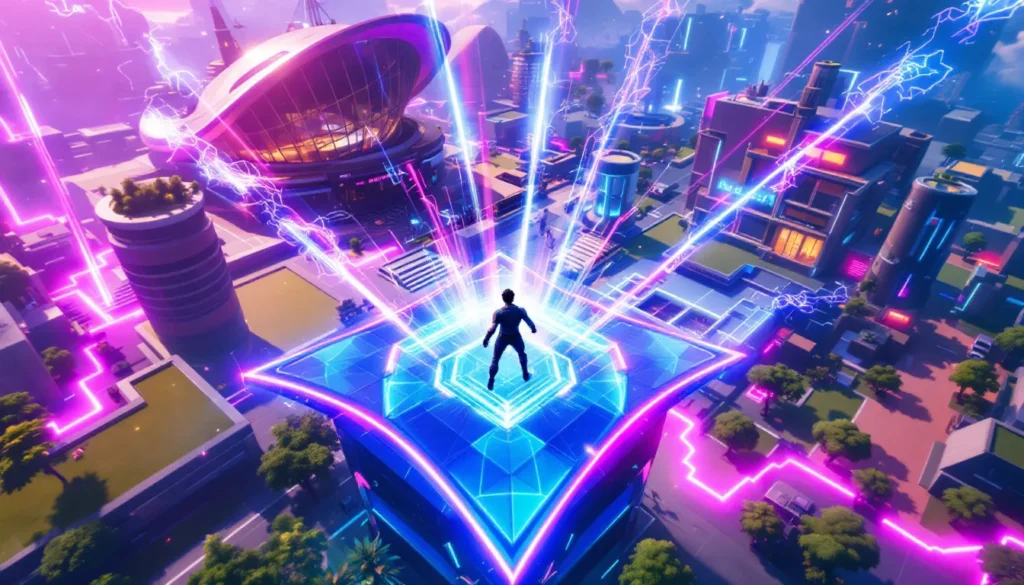
Dance floors are interactive environmental objects scattered across Fortnite’s map that provide temporary movement and speed boosts when activated. They’re glowing, illuminated platforms that emit visual and audio cues when players step on them. Unlike passive loot or cosmetic decorations, dance floors function as legitimate gameplay mechanics with real mechanical impact, they’re not just for showing off emotes.
Introduced as part of Epic’s push to make map traversal more dynamic and less reliant on building alone, dance floors grant players significant movement advantages in specific situations. When activated, they launch players upward and forward with increased velocity, making them valuable for repositioning, escaping fights, or rushing opponents. The key distinction is that dance floors are map features, not consumable items, they’re always available (in modes where they spawn) and can be used repeatedly by multiple players.
How Dance Floors Work Mechanically
Speed And Movement Buffs Explained
Dance floors trigger an immediate burst of momentum when a player stands on the platform for approximately 0.5 seconds. The boost launches players in a specific trajectory, upward at roughly a 45-degree angle, with movement speed increasing by approximately 50-80% depending on the exact patch. This isn’t a subtle effect: the movement change is dramatic enough that experienced players can chain multiple dance floors for sustained traversal.
The vertical lift component provides roughly 30-40 units of height, making dance floors useful for clearing ledges, accessing elevated areas, or escaping to high ground during fights. The horizontal velocity component propels players forward at significant speed, which can cover 30-50 meters of distance in a single activation. Notably, the boost doesn’t impair your ability to build, shoot, or use items, you can activate a dance floor, get the movement buff mid-boost, and immediately switch to combat mode.
Absorbing fall damage while on a dance floor is a critical mechanic. The platform does not negate fall damage, but the upward launch often prevents players from falling into dangerous situations in the first place. But, if you’re at low health and you leap from a dance floor only to drop significantly, you’ll take damage normally.
Visual Indicators And Audio Cues
Dance floors emit a distinctive neon glow, typically bright blues, purples, or pinks depending on the seasonal aesthetic, that makes them visible from a considerable distance. The platform pulses rhythmically, which helps players identify it even in chaotic map areas with competing visual noise. When activated, the glow intensifies and radiates outward in a brief pulse effect.
The audio signature is equally unmistakable. A high-pitched, electronic sound effect plays when players step on the platform, followed by an energetic beat that syncs with the movement launch. Enemy players within roughly 50-75 meters will hear this audio cue, so using a dance floor isn’t a stealth play, it broadcasts your position to nearby opponents. In competitive play, this audio leak is a significant consideration that separates casual usage from strategic deployment.
Visual particles trail behind players during the speed boost, creating a colorful streak effect. This makes players using dance floors temporarily more visible, which is another trade-off: you gain mobility but sacrifice concealment.
Finding And Locating Dance Floors Across The Map
Current Season Locations
In the current season (as of March 2026), dance floors are concentrated in specific high-traffic POIs. The most reliable locations include:
- Steamy Stacks – Two dance floors positioned in the central plaza area, easily accessible from any approach
- Rave Cave – Three dance floors scattered throughout the underground nightclub section: these are the most numerous cluster on the map
- Mega City – One dance floor in the Entertainment District zone (western section of the POI)
- Nitro Mansion – One dance floor on the rooftop overlooking the main building
- Dirty Docks – One dance floor on the warehouse platform near the water
Each location has undergone refinements since dance floors’ introduction. Epic has balanced spawn locations to prevent excessive clustering in one zone while ensuring accessibility across different playstyles. Hitting a dance floor during early rotation requires knowledge of these spawns: landing directly at one guarantees a mobility advantage over players who must walk or build their way to optimal positioning.
Map markers and named locations sometimes shift seasonally, but these POIs remain stable anchors. Use your map’s grid system, if you’re unfamiliar with coordinates, drop at a named location and work outward from there.
Past Dance Floor Locations And Updates
Dance floors weren’t always available everywhere. In earlier seasons, they were concentrated primarily in seasonal event zones and limited-time locations. The mechanic was introduced during a mid-season update roughly 18 months ago, and its availability has only expanded.
Notable past locations that have rotated out or been replaced include the original cluster at Party Royale (a limited-time event location that no longer exists in standard battle royale) and temporary dance floors in the Fortnite Festival area during cross-promotional events. Understanding this history matters because older guides and YouTube videos may reference obsolete locations, always verify current patch notes before heading to a specific spot.
Epic has shown a pattern of keeping dance floors relevant by rotating their positions slightly each season while maintaining at least 7-10 accessible spawns across the map. This prevents the mechanic from becoming stale while ensuring competitive integrity (no single location grants an insurmountable advantage).
Unlocking And Activating Dance Floors
Step-By-Step Activation Guide
Activating a dance floor requires no unlock progression or special items, any player can use one immediately upon encountering it. Here’s the mechanical process:
- Approach the platform – Walk or sprint toward the glowing dance floor. The platform is roughly 8×8 meters in size, so you don’t need pixel-perfect positioning.
- Stand on the surface – Simply being on the platform triggers activation: no button press is required.
- Wait approximately 0.5 seconds – This is the activation delay. You’ll see the platform glow intensify and hear the audio cue.
- Experience the launch – The velocity boost activates, propelling you upward and forward automatically. You don’t control the trajectory during the boost, it launches at a fixed angle.
- Transition to your next action – The boost lasts roughly 1-1.5 seconds. You can immediately build, shoot, or continue moving once the initial launch completes.
There’s no cooldown between uses on the same platform, once the first player’s boost ends, the next player can instantly activate it. In squad fights, this means multiple players can chain dance floor boosts sequentially for sustained mobility.
Multiple Player Interactions
Dance floors support simultaneous activation by multiple players. If three squad mates are on the same platform at the same time, all three will receive the speed boost simultaneously. This creates interesting squad-level strategies where coordinated teams can chain boosts across multiple platforms for aggressive rotations.
But, there’s a subtle mechanical interaction to understand: each player’s boost is independent. A player standing still on a dance floor won’t be “held” in place if another player activates, they’ll both launch, but their trajectories are parallel, not merged. This matters for close-quarters squad maneuvers.
Respawn timers don’t apply to dance floors. Once activated, they reset immediately for the next user. This differs from consumable items or temporary spawns, which have distinct cooldown mechanics. The platform’s availability is essentially unlimited.
Strategic Uses For Dance Floors In Gameplay
Competitive Advantages And Combat Scenarios
Dance floors shine in mid-game repositioning. After a fight concludes in one POI and you need to reach the next zone, a dance floor can shave 5-10 seconds off your rotation, significant time in competitive play where late arrivals get third-partied or caught in storm damage. Using a dance floor as an escape route from a losing fight gives you mobility comparable to building height without expending materials.
Offensive positioning is another critical use case. If you’re pushing an opponent who’s hunkered down with builds, activating a dance floor nearby and launching toward them creates a surprise angle. The audio cue leaks your position, but the speed advantage often compensates, you’re arriving faster than they can react.
In 1v1 scenarios, dance floors force positioning changes on both players. If your opponent controls high ground and you have access to a nearby dance floor, the boost can level the playing field by launching you to an unexpected height or angle. This is particularly valuable in final-zone fights where traditional building is constrained by storm damage or limited space.
Team Coordination And Squad Benefits
Squads that master dance floor timing gain significant advantages. Imagine a scenario: your squad is rotating into zone, and a coordinated enemy team intercepts. If your team simultaneously activates a nearby dance floor, all four players gain mobility simultaneously, breaking the engagement and repositioning collectively. This is exponentially more powerful than individual players using dance floors separately.
Call-outs become critical in high-level play. A squad member saying “Dance floor at 2 o’clock, rotating through it in 5 seconds” allows teammates to time their approaches and maintain formation while leveraging the mobility boost. In competitive tournaments and ranked play, this coordination separates top-tier teams from mid-level competitors.
Dance floors also serve defensive purposes in squad scenarios. If your team is being rushed by an aggressive squad, spreading out across multiple nearby dance floors and launching in different directions can cause enemies to split their focus and lose the advantage of numerical superiority. The initial chaos often breaks their coordinated push.
Dance Floor Mechanics In Different Game Modes
Arena And Ranked Play Considerations
In Arena and ranked modes, dance floors remain available and function identically to casual battle royale. But, the competitive environment shifts their utility. At higher tiers (Champion division and above), opponents are more aware of dance floor locations and expect you to use them, which means using a dance floor becomes a predictable play unless you execute it with specific tactical intent.
Top-ranked players treat dance floors as territorial control tools. In early game, securing a POI with dance floor spawns grants rotational flexibility throughout the match. In late game, knowing which remaining dance floors are accessible near final zones becomes critical intel. A player with access to a dance floor heading into final circle has a positioning advantage that can swing a close match.
One subtle interaction: in ranked matches where material efficiency is paramount, using dance floors for mobility preservation allows players to conserve building materials. Using a dance floor instead of building vertical height or horizontal distance saves wood/brick/metal, which compounds throughout a match. This is a legitimate competitive advantage that high-level players leverage systematically.
Arena’s progressive difficulty also changes dance floor usage. At lower tiers, many opponents don’t know how to counter or predict dance floor plays. At Champion tier, expect enemies to pre-aim angles where you’ll land and use the audio cue as an alert to set up defensive positions.
Creative Mode Applications
Creative Mode elevates dance floors from environmental objects to map design tools. Creators can place dance floor objects in custom maps, controlling their exact positioning and density. This enables entirely new game types: “Dance Floor Parkour” challenges, “Momentum Gauntlet” courses, and mobility-focused mini-games that wouldn’t be possible in standard battle royale.
Map creators use dance floors to teach newer players movement mechanics in a low-stakes environment. A Creative map designed as a “Dance Floor Obstacle Course” with escalating difficulty teaches timing, momentum management, and chaining boosts, skills directly transferable to competitive play.
Competitive Creative tournaments sometimes feature dance floors as mandatory mechanics, forcing pro players to master them under pressure. These events reveal high-level techniques and creative applications that eventually filter into standard play. Major esports organizations practice dance floor usage extensively in Creative before competing in official tournaments.
Common Mistakes And How To Avoid Them
Timing Errors And Positioning Failures
The most frequent mistake is activating a dance floor predictably. Launching from the same platform at the same angle every time makes you an easy target for opponents who learn your habits. Vary your approach: sometimes grab the boost and immediately build, sometimes use it purely for momentum then hard-commit to combat.
Timing your dance floor activation relative to enemy engagements is critical. Activating a dance floor when enemies have clear line of sight to your landing spot is a death sentence, you’re locked into a predetermined trajectory with no control. Instead, wait for enemy focus to shift, for grenades to detonate, or for cover to become available mid-boost.
Positioning failures often stem from misunderstanding the launch angle. New players expect the boost to launch them exactly where they’re aiming or building: instead, the fixed 45-degree trajectory can overshoot or undershoot your intended destination. Practice in Creative Mode to internalize exactly where you’ll land from each dance floor location.
Another common error: launching into storm damage. If you use a dance floor boost and land in an area with active storm, the mobility advantage becomes a liability. Always map out safe landing zones before activating, especially in late-game scenarios.
Resource Management While Using Dance Floors
Don’t treat dance floors as a substitute for strategic material management. Some players use dance floors aggressively to replace building, depleting their materials early in matches. This backfires when they need to build defensively later and lack resources. Dance floors should complement your material efficiency, not replace it entirely.
Another subtlety: the audio cue from dance floor activation consumes enemy attention and reaction time, but it also broadcasts your location. Using a dance floor when you’re trying to rotate undetected, especially in competitive matches, leaks your position to enemies scanning the audio landscape. Silent rotations (via careful building or terrain navigation) are sometimes superior to the mobility advantage.
Don’t waste boosts in low-pressure situations. Activating a dance floor during early-game farming or looting is fine, but in fights, every boost counts. Reserve your usage for moments with actual strategic value: escaping third-parties, rotating under time pressure, or repositioning for kills.
Pro Tips And Advanced Strategies
High-Level Gameplay Techniques
Professional players layer dance floor usage with building mechanics. The technique works like this: activate a dance floor, receive the boost, and mid-launch, immediately place a ramp or platform to alter your trajectory slightly. This hybrid approach gives you the speed advantage of the dance floor plus directional control of building, a significant technical edge.
Anticipatory dance floor usage is another pro technique. Rather than using a dance floor reactively (after spotting enemies), top players use them predictively based on zone position and enemy rotations. If you anticipate opponents will rotate through a specific location, pre-positioning near a dance floor and timing your boost to intercept them grants surprise and speed simultaneously.
Chaining multiple dance floors is advanced but powerful. If your rotation path crosses two or three dance floor locations in sequence, timing your movement to activate each in rapid succession compounds the mobility advantage. This requires intimate map knowledge and precise positioning, but it’s viable for experienced players grinding ranked or scrims.
Audio baiting is a psychological technique that pairs dance floor usage with deception. Activate a dance floor to create the audio cue, then build vertically in a different direction, enemies respond to the audio and look toward where you launched, while you’ve already repositioned elsewhere. This works exceptionally well in squad matches where split focus is common.
Combining Dance Floors With Other Mechanics
Dance floors synergize powerfully with mobility items. If you’re carrying a Shockwave Grenade, launch from a dance floor and detonate the grenade mid-boost for stacking velocity effects. The combined momentum can achieve distance impossible with either mechanic alone.
Weapon positioning during dance floor boosts is critical. If you know you’re launching toward enemies, time your boost so you’re switching to an AR or shotgun mid-flight and ready to engage immediately upon landing. This timing eliminates the delay between landing and weapon readiness, a split-second advantage that converts to eliminations.
Defensive building during incoming dance floor boosts from enemies is an underexplored technique. If you see an opponent launching toward you via dance floor, immediately build walls or ramps to disrupt their landing zone. They can’t adjust mid-boost, so forcing them to land in poor positions negates the mobility advantage.
Dance floors interact subtly with vehicle mechanics. If you’re driving and pass near a dance floor’s perimeter, exiting the vehicle and quickly activating the boost creates a hard-to-predict repositioning play. The vehicle provides cover while transitioning to the platform, and then you launch out while the opponent is still tracking your vehicle position.
Like other high-skill gameplay mechanics, dance floors reward practice and map knowledge. Spending time in Fortnite Chapter 5 locations to learn dance floor positions under low-pressure conditions translates directly to competitive execution. Teams preparing for tournaments often dedicate practice sessions to dance floor timing and chaining, treating it as a skill pillar alongside building and aim.
For players interested in exploring other movement-based mechanics, reviewing strategies for Fortnite Zero Build Tournaments reveals how top players approach non-building mobility across different competitive formats. Dance floors maintain relevance in both building and non-building modes, but the strategic application shifts significantly.
Creative mode remains the best practice environment. Maps specifically designed for Fortnite Racing Maps often incorporate dance floor elements, allowing players to develop rhythm and timing in pressure-free settings. These experiences build muscle memory that translates when milliseconds matter in ranked play.
Mastering dance floor mechanics doesn’t require artistic skill, but understanding the visual and spatial geometry does. Players learning how environmental objects integrate into gameplay can benefit from studying how different mechanics combine, understanding positioning and angles that apply to Master the Fortnite Logo drawing concepts also sharpens spatial awareness useful for predicting dance floor trajectories and landing zones.
Conclusion
Dance floors represent one of Fortnite’s most elegant mechanical additions, simple to understand, difficult to master, and strategically deep enough to reward dedicated practice. They’re not a broken feature that dominates the meta: instead, they’re a tool that separates players who understand their mechanical nuances from those who use them casually.
The key takeaway is that dance floors function best as part of a broader tactical toolkit. They’re rotation accelerators in early game, escape mechanisms in mid-fight scenarios, and positioning multipliers in late-game chaos. Understanding when to use them, when to reserve them, and how to combine them with other mechanics elevates your overall Fortnite gameplay.
Practice in Creative Mode, learn all current spawn locations, and develop timing awareness in low-stakes matches before deploying these techniques in competitive arena. As the meta continues to shift with seasonal updates, dance floors will remain relevant, Epic consistently ensures movement mechanics stay viable without becoming oppressive. The investment in learning them pays dividends across all game modes and skill tiers.


