Table of Contents
ToggleThe LEGO Ninjago Fortnite crossover has officially landed in Chapter 6, bringing the beloved ninja warriors into Epic Games’ battle royale. For fans of both franchises, this collaboration is a game-changer, literally. Players can now drop into the island as their favorite LEGO Ninjago characters, complete with themed cosmetics, emotes, and weaponry that capture the aesthetic of Ninjago’s vibrant universe. Whether you’re a casual player hunting cosmetics or a competitive gamer curious about whether these skins offer any gameplay advantages, this guide covers everything you need to know about the LEGO Ninjago Fortnite event: how to unlock items, what they cost, strategy implications, and why this collaboration matters in the broader context of Fortnite’s crossover strategy.
Key Takeaways
- The LEGO Ninjago Fortnite crossover brings iconic ninja warriors to Chapter 6 with authentic character skins, emotes, and cosmetics that honor the original animated series.
- All LEGO Ninjago cosmetics are purely visual with no gameplay advantages—hitboxes and mechanics remain identical across all skins, ensuring competitive integrity.
- Character skins range from 1,200–2,000 V-Bucks individually, but bundle packs offer better value for players looking to collect multiple Ninjago cosmetics and gear.
- Free challenges tied to the LEGO Ninjago crossover award cosmetic items, weapon wraps, and sprays without requiring V-Buck purchases.
- The collaboration represents a strategic partnership exposing LEGO Ninjago to Fortnite’s 500+ million-player base while establishing Fortnite as the premier platform for major IP crossovers.
What Is the LEGO Ninjago Fortnite Crossover?
The LEGO Ninjago Fortnite crossover is a limited-time collaboration between Epic Games and The LEGO Group, featuring characters, cosmetics, and themed content from the LEGO Ninjago animated series. Launched in Chapter 6, Season 1 of Fortnite, the event allows players to embody iconic ninja warriors and engage with content tied to the Ninjago universe.
Unlike some crossovers that feel tacked-on, LEGO Ninjago’s integration into Fortnite includes dedicated cosmetics, challenges, and themed weaponry. The collaboration spans multiple weeks, with new cosmetics rotating through the Item Shop and exclusive rewards tied to limited-time challenges. The event emphasizes the ninja theme through aesthetic touches, color schemes, emote animations, and even consumable items that reflect Ninjago’s martial arts heritage.
This crossover serves as a strategic partnership for both brands. LEGO Ninjago reaches Fortnite’s 500+ million-player base, while Epic Games taps into a fanbase that’s grown significantly since Ninjago’s 2011 debut. The timing in 2026 aligns with renewed interest in the LEGO Ninjago franchise across multiple media platforms, making the Fortnite crossover part of a larger content push.
For players, the crossover is purely cosmetic, there’s no gameplay-exclusive advantage tied to owning Ninjago skins. But, the cultural resonance of these characters can boost confidence or immersion, which competitive players know translates to psychological momentum in matches.
Available LEGO Ninjago Skins and Cosmetics
Character Skins and Their Details
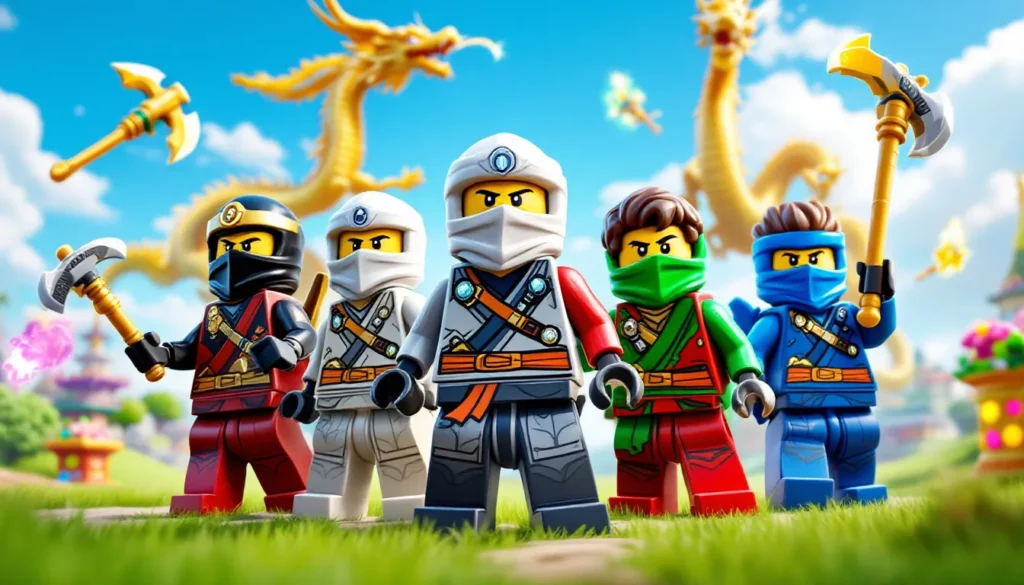
The crossover features multiple LEGO Ninjago character skins, each with distinct visual designs based on the original animated series. The core roster includes:
- Cole (The Black Ninja) – Master of Earth, recognizable by his black gi and gold accents. The skin captures his stoic personality with detailed armor plating and elemental insignia.
- Zane (The White Ninja) – Master of Ice, featuring white and silver color schemes with cybernetic-inspired details reflecting his character arc.
- Kai (The Red Ninja) – Master of Fire, with vibrant red and gold detailing and flame-themed armor elements.
- Jay (The Blue Ninja) – Master of Lightning, dressed in blue with electric-inspired design elements throughout the outfit.
- Lloyd (The Gold Ninja / Green Ninja) – The series protagonist, available in multiple variants including his iconic green ninja form and post-series gold ninja appearance.
- Nya (The Samurai/Water Ninja) – Often featuring her samurai-inspired outfit with water-themed coloring and design elements.
Each skin is rendered in true LEGO form, blocky proportions, bright plastic-like textures, and exaggerated features that match LEGO’s signature aesthetic. Unlike realistic crossovers, LEGO Ninjago skins maintain their toy-like appearance, which some players find charming and others find visually distinct on the island.
Weapons, Pickaxes, and Back Bling
The cosmetic bundle extends beyond character skins to include thematic weaponry and gear:
Pickaxes and Harvesting Tools:
- Ninja swords styled after Ninjago’s signature weapons (katanas, golden shurikens).
- Elemental-themed pickaxes that change appearance based on which ninja’s cosmetic bundle you own.
- LEGO-specific harvesting animations that play when gathering materials.
Back Bling:
- Elemental spinners and weapons racks that float behind characters.
- LEGO-themed backpack designs reflecting each ninja’s elemental affiliation.
- Golden dragons and mystical artifacts from the Ninjago lore.
Weapon Wraps (if available):
- Assault rifle and shotgun skins featuring Ninjago insignia and color schemes.
- Elemental-themed weapon designs that match the cosmetic tier you’ve purchased.
All these items are purely cosmetic and offer zero gameplay advantage, they don’t alter damage, accuracy, or any mechanical property.
Emotes and Other Cosmetic Items
Emotes are where LEGO Ninjago’s personality really shines. The collaboration includes:
- Spinjitzu emote – Players perform the iconic spinning ninja move, a signature technique from the series. This is often tied to bundle purchases.
- Elemental pose emotes – Character-specific emotes showing off each ninja’s elemental mastery (Cole summoning earth, Kai creating fire, etc.).
- Victory pose emotes – Celebratory animations for outfit finishers.
- Legendary move emotes – Advanced martial arts stances and finishing moves.
Also, gliders, loading screens, and sprays round out the cosmetic offerings. Gliders are particularly notable, they often feature LEGO dragon designs or spin-based mechanics that reference Ninjago’s mystical elements.
How to Unlock and Obtain Items
Item Shop Availability and Pricing
The primary way to acquire LEGO Ninjago cosmetics is through Fortnite’s Item Shop, which rotates daily and updates every 24 hours at 8 PM EST. During the crossover event, Ninjago items occupy dedicated sections of the shop.
Pricing structure (based on 2026 Fortnite cosmetic standards):
- Individual character skins: Typically 1,200–2,000 V-Bucks ($10–$20 USD).
- Bundle packs: 3,000–4,500 V-Bucks for multiple skins, cosmetics, and pickaxes bundled together.
- Pickaxes and back bling: 800–1,200 V-Bucks individually.
- Emotes: 200–500 V-Bucks depending on rarity.
- Gliders: 500–1,200 V-Bucks.
Bundle deals offer the best value, purchasing three individual skins separately costs more than a comprehensive bundle that includes multiple character cosmetics, pickaxes, and back bling.
Rotation strategy: Epic Games typically features one or two Ninjago cosmetics in the Item Shop daily, rotating through the full roster over 2–3 weeks. Players shouldn’t feel pressured to buy immediately: if they miss a skin, it will cycle back into the shop within days.
One critical note: seasonal cosmetics occasionally rotate out of the Item Shop permanently after a crossover ends. While many cosmetics return during themed rotations, there’s no guarantee. If you want a specific skin, don’t assume it’ll always be available.
Battle Pass Integration
Unlike some crossovers, LEGO Ninjago cosmetics are not directly tied to the Fortnite Battle Pass, they’re purely Item Shop purchases. But, the crossover includes limited-time challenges that award in-game rewards and cosmetic unlocks.
Challenge structure:
- Free challenges: Complete tasks like “Defeat 5 players in Team Rumble” or “Visit LEGO Ninjago-themed locations” to earn rewards like sprays, loading screens, or weapon wraps.
- Premium challenges: Available to all players: completing them nets V-Bucks or cosmetic rewards (usually common items).
Battle Pass crossover synergy: If you own the current Battle Pass, you’ll have access to exclusive cosmetic variations or reactive styles tied to Ninjago. For example, skins might unlock special elemental visual effects at specific Battle Pass tiers.
This structure encourages players to engage with Ninjago cosmetics purchased from the Item Shop by offering complementary rewards through challenges. It’s a “buy what you like, earn extras” approach rather than gatekeeping content behind battle pass tiers.
Gameplay Impact and Strategy Tips
Character Abilities and Special Features
This is where Fortnite players often ask: “Do LEGO Ninjago skins have gameplay advantages?” The answer is no, cosmetics in Fortnite are purely visual. But, there are perceptual and psychological factors worth understanding.
Visual hitbox reality:
All skins in Fortnite, regardless of silhouette, share identical hitboxes. A LEGO Ninjago character skin has the same collision model as the default skin or any other cosmetic. The blocky, oversized proportions of LEGO Ninjago skins don’t make you a bigger target, Fortnite’s engine normalizes hitbox sizes across all cosmetics to maintain competitive integrity.
Visual distinction:
LEGO Ninjago skins are visually larger and bolder than many default skins, making them stand out on the island. In crowded areas or during mid-game chaos, you might be easier to spot at a distance. Some competitive players intentionally choose low-profile skins for this reason, while others argue the psychological advantage of feeling larger outweighs the visual trade-off.
Animation differences:
Character skins sometimes have slightly different animation speeds for running, jumping, or building, but Fortnite’s engine standardizes these too. There are no mechanical advantages tied to specific cosmetics.
Best Loadouts and Combat Strategies
While Ninjago skins don’t buff your stats, pairing them with loadouts that feel ninja-themed can boost immersion and, by extension, psychological performance.
Thematic loadout example:
- Skin: Cole (The Black Ninja)
- Pickaxe: Elemental earth-themed harvesting tool
- Back bling: Golden dragon or stone artifact
- Glider: LEGO dragon glider
- Emote: Spinjitzu finishing emote
- Weapon wraps: Earth or stone-themed weapon skins
Strategic considerations:
-
Visibility vs. aesthetics: LEGO Ninjago skins are bright and distinctive. In Arena or ranked modes, this works against you if stealth is your playstyle. In casual matches or Team Rumble, the aesthetic beats competitive advantage.
-
Mental edge: Wearing a character you love genuinely impacts performance. Studies on competitive gaming show that confidence and positive emotional state correlate with better decision-making and mechanical execution. If a Ninjago skin makes you feel like a skilled ninja, you’ll play with more conviction.
-
Weapon pairing: There’s no mechanical synergy between Ninjago cosmetics and specific weapons (assault rifles, shotguns, etc.). Choose based on your loadout preference and playstyle, not cosmetics.
-
Building rhythm: Some players claim that LEGO-themed building animations feel different due to the visual style. This is purely perception, the building speed and mechanics are identical. But, if the visual feedback helps your rhythm, use it.
Competitive note: In professional Fortnite tournaments, cosmetic choice is mostly aesthetic. Top players choose based on personal preference or team branding, not mechanical advantage. During the Fortnite Sukuna: The Ultimate, competitive players focused on crossover skins for content creation and personal enjoyment, not rank grinding.
Lore and Story Behind the Collaboration
Why LEGO Ninjago Chose Fortnite
The LEGO Ninjago x Fortnite crossover is the result of strategic brand alignment and market positioning. Here’s why both companies pursued this partnership:
LEGO Ninjago’s brand reinvigoration: LEGO Ninjago, which debuted in 2011, has sustained itself through merchandise, animated series, and games. By 2026, the franchise sought to reach younger and older audiences simultaneously. Fortnite’s 500+ million-player base, with a median age spanning from pre-teens to adults, offered unparalleled reach. A single crossover event can expose Ninjago to millions of potential toy and merchandise buyers.
Fortnite’s crossover ecosystem: Epic Games has built Fortnite’s engagement model partly on limited-time cosmetic collaborations. From Marvel to DC to anime franchises, crossovers drive engagement spikes and V-Buck spending. LEGO Ninjago represented a perfect fit: high brand recognition, visually distinctive aesthetic, and a fanbase with disposable income.
Cultural synergy: Both Ninjago and Fortnite emphasize action, vibrant visual design, and fantastical settings. LEGO’s blocky aesthetic translates naturally into Fortnite’s colorful island setting. There’s no jarring tonal mismatch, LEGO characters feel at home in Fortnite’s world.
Timing and media strategy: The 2026 crossover coincided with renewed LEGO Ninjago content across streaming platforms, gaming, and merchandise lines. Major IP partnerships now coordinate across multiple media, Fortnite wasn’t the only place to experience Ninjago in 2026: it was one element of a coordinated multimedia push.
Youth and family gaming: Fortnite has evolved from its “hardcore” perception into a genuinely family-friendly multiplayer space. Parents and younger players often play together. LEGO Ninjago, marketed to kids 8–16, fit this demographic perfectly. A parent might buy their child a Ninjago skin as a reward, creating revenue for Epic Games while introducing Ninjago to a new audience.
The collaboration eventually benefits both parties: LEGO Ninjago gains visibility and nostalgic credibility among adults who grew up with LEGO, while Fortnite maintains its position as the platform where major IP collaborations happen. It’s a symbiotic relationship built on access to audiences both brands can’t easily reach independently.
Community Reception and Fan Reactions
The LEGO Ninjago Fortnite crossover has generated mixed but largely positive reception from the community, with specific segments showing distinct preferences.
Ninjago fans: Long-time Ninjago enthusiasts embraced the crossover enthusiastically. The detailed cosmetics, accurate character representations, and authentic emotes (particularly the Spinjitzu move) resonated strongly. Reddit threads and Twitter posts from this group expressed excitement about seeing beloved characters rendered in Fortnite’s style. But, some purists criticized the blocky LEGO aesthetic as too cartoonish for a modern battle royale, preferring more realistic interpretations.
Fortnite cosmetic collectors: This group, motivated by completing cosmetic catalogs and collecting unique skins, immediately purchased Ninjago bundles. The distinctiveness of LEGO characters, their bright colors and oversized proportions, made them “must-have” additions to cosmetic collections.
Competitive players: Reactions were more muted here. Since the skins offer no mechanical advantage, competitive players viewed Ninjago cosmetics as a personal preference rather than a strategic acquisition. Some appreciated the novelty for casual play and content creation but felt indifferent toward ranked grind implications.
Younger players: A significant segment of Fortnite’s user base (under 18) reacted positively, many having grown up with LEGO Ninjago toys or animated content. For them, the crossover bridged two beloved franchises, driving enthusiasm and social media engagement.
Skeptics and exhausted players: Some community members expressed “collaboration fatigue,” arguing that Fortnite’s endless crossovers dilute the game’s original identity. This sentiment, while minority, resurfaces with every major crossover announcement.
Content creator response: Streamers and YouTubers capitalized heavily on Ninjago content. Early Ninjago cosmetic unboxings, challenge completions, and thematic loadout showcases generated millions of views. The crossover’s visual distinctiveness made content inherently shareable and thumbnail-friendly.
Overall, the community consensus leaned positive. Ninjago fans felt heard, cosmetic enthusiasts got collectibles, and Fortnite’s broader playerbase appreciated the content variety without feeling forced to participate. The crossover succeeded in its primary goal: drawing audiences from both franchises without alienating existing communities.
Comparison With Other Crossover Events
Fortnite’s crossover history provides context for how the LEGO Ninjago event stacks up against other major collaborations.
Marvel and DC crossovers: Superhero collaborations with Marvel (Avengers, Spider-Man) and DC (Batman, Superman) dominated 2020–2024. These crossovers featured recognizable characters with extensive lore and existing fan bases. Compared to those, LEGO Ninjago is niche but dedicated. Marvel/DC cosmetics sold more units due to broader cultural penetration, but Ninjago’s community showed higher engagement percentages relative to franchise size.
Anime crossovers (Naruto, Dragon Ball, Demon Slayer): Anime collaborations have become increasingly common and successful. LEGO Ninjago differs by being a Western IP (though it has anime-style animation). Anime fans are notoriously passionate and dedicated to cosmetic purchases. The Demon Slayer crossover, for example, generated record V-Buck spending in certain regions. LEGO Ninjago attracted similar enthusiasm from its core audience but less mainstream appeal than anime properties.
Gaming IP crossovers (Halo, Doom, Final Fantasy): Gaming IP crossovers attract players invested in video game culture. These often perform strongly in competitive and hardcore gaming communities. Ninjago, being more toy-and-animation-focused, appeals to a different demographic but shares some overlap with Halo cosmetic buyers (nostalgia, action themes).
Collaboration scale: LEGO Ninjago’s crossover includes dedicated challenges, rotating cosmetics, and limited-time events, standard for major 2026 collaborations. But, it lacks interactive map changes that some crossovers featured (e.g., Marvel’s Avengers created themed map locations). This is partly due to LEGO Ninjago’s later release in Chapter 6: map real estate was already allocated to other seasonal content.
Cosmetic quality and detail: LEGO Ninjago skins are among the most detailed character cosmetics in Fortnite, matching or exceeding major Marvel and anime collaborations. The LEGO aesthetic required precision to capture the toy-like quality, and players consistently praised the execution.
Pricing and value: LEGO Ninjago cosmetics priced at 1,200–2,000 V-Bucks align with industry standards. Bundles offered comparable value to Marvel and anime crossovers, with no premium pricing even though the IP’s popularity.
Longevity and reruns: Time will tell if LEGO Ninjago cosmetics return annually or every few years like some crossovers. Historical data suggests popular cosmetics (even niche ones) see returns every 1–2 years, but Ninjago’s rotation frequency will depend on merchandise cycles and media releases.
Tips for New Players Jumping In
If you’re new to Fortnite and interested in LEGO Ninjago cosmetics, or if you’re a Ninjago fan trying Fortnite for the first time, here’s how to navigate the crossover efficiently:
1. Understand cosmetics are optional: This bears repeating: Fortnite cosmetics are purely aesthetic. You don’t need to buy anything to enjoy the game competitively or casually. New players should focus on learning mechanics, not spending V-Bucks immediately.
2. Set a budget: V-Bucks cost real money. A single skin costs $10–$20: bundles run $25–$40. Decide your spending limit before entering the Item Shop. Many new players overspend on cosmetics before understanding their actual playstyle preference.
3. Farm free V-Bucks: Complete Daily and Weekly Challenges, and progress through the Battle Pass. The free Battle Pass tier rewards 15–30 V-Bucks per season, and additional challenges offer more. Grinding out 50–100 free V-Bucks per season can offset cosmetic costs over time.
4. Buy bundles, not individuals: If you love Ninjago, bundles offer better value. A bundle containing three skins, pickaxes, and back bling costs less per item than purchasing them separately.
5. Don’t panic buy: Cosmetics rotate through the Item Shop. If you miss a skin today, it will likely return within 1–3 weeks. Avoid impulse purchases driven by FOMO (fear of missing out). Make intentional choices about which cosmetics genuinely appeal to you.
6. Watch cosmetics in action: Before buying, watch streamers or content creators wear the skin in gameplay. A cosmetic that looks good in the Item Shop might feel different in-game at 1080p+ resolution. YouTube “Fortnite Ninjago skin showcase” videos let you see animations, emotes, and aesthetics in context.
7. Prioritize comfort: Choose skins based on personal preference, not meta or competitive advantage. You’ll play better with a cosmetic that makes you happy than one that’s “optimal.”
8. Complete Ninjago challenges for free rewards: The crossover event includes free challenges awarding cosmetics and sprays. Complete these to unlock free items without spending V-Bucks. Check the Challenges tab (top-right corner of the main menu) for Ninjago-specific tasks.
9. Understand platform differences: Fortnite runs on PC, PlayStation, Xbox, Nintendo Switch, and mobile. Cosmetics sync across platforms if linked to the same Epic Games account. A skin purchased on PC is instantly available on mobile, console, and vice versa. New players should link accounts early to avoid duplicate purchases across platforms.
10. Community resources: If you’re overwhelmed by Fortnite’s mechanics, content creators and wiki sites offer beginner guides. Fortnite’s official YouTube channel and major streamers (Sypher PK, SypherPK, Ninja) regularly release beginner content explaining mechanics, strategies, and cosmetic previews.
The LEGO Ninjago crossover is an excellent entry point for Ninjago fans into Fortnite. Use it as motivation to learn the game, but don’t let cosmetic costs deter your enjoyment. Focus on fundamentals, building, aiming, positioning, and cosmetics become a bonus cherry on top.
Conclusion
The LEGO Ninjago Fortnite crossover represents a thoughtful partnership between two global entertainment powerhouses. For LEGO Ninjago fans, it validates the franchise’s enduring appeal and provides a high-profile platform for character expression. For Fortnite players, it adds visually distinctive cosmetics that stand out on the island and deliver authentic designs that honor the source material.
While the crossover introduces zero gameplay mechanical changes, cosmetics remain purely aesthetic, the psychological and cultural impact shouldn’t be understated. Wearing a character you love genuinely affects confidence and enjoyment, which translates to better decision-making in matches. The crossover also strengthens community bonds by celebrating a shared love of LEGO Ninjago across millions of players.
From a practical standpoint, players should approach Ninjago cosmetics with intention. Budget responsibly, prioritize bundles over individual purchases, and don’t feel pressured to buy everything. The cosmetics will rotate through the Item Shop repeatedly, and free challenges offer cosmetic rewards without spending. New players should focus on learning Fortnite’s mechanics before investing heavily in cosmetics.
The LEGO Ninjago x Fortnite crossover is eventually a win for fans of both franchises. It exemplifies how modern gaming can celebrate multiple IP traditions within a single ecosystem, creating moments of joy for communities that might otherwise never intersect. Whether you’re dropping in as Kai, Lloyd, or another ninja, the crossover is a testament to Fortnite’s continued evolution as a platform for collaborative storytelling and cultural celebration.


